Master rights vs publishing rights: the two copyrights in every song
Every released song carries two copyrights: the master (the recording) and the publishing (the song). They are owned, licensed and paid differently. Most independent artists only collect on one.
Every song you release carries two separate copyrights.
- The master is the recording.
- The publishing is the song: the melody and the lyrics.
They can belong to different people, they earn from different sources, and they are paid by different organisations. Almost every money question in music starts with which of the two you are talking about.
The song and the recording are different things
When you write a melody and lyrics, you create a musical work, also called the composition. The rights to it are the publishing.

When you record that song, you create a sound recording, the master. One song can have many masters: the demo, the album version, a radio edit, a live take, a cover by someone else. The song stays the same. Each recording is new.
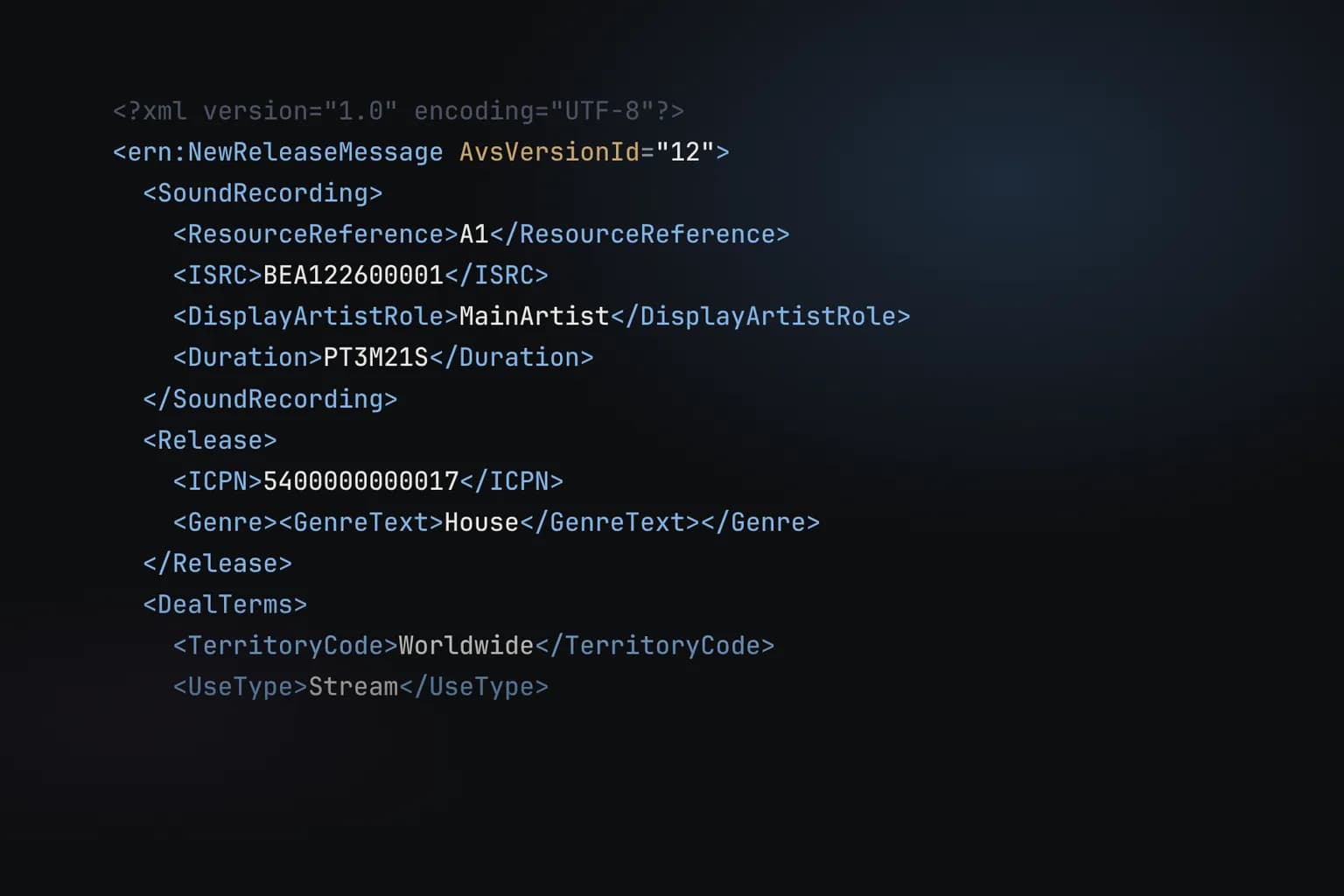
That is also why the two have different codes: an ISRC for each recording and one ISWC for the song.
How each one earns
| Income | Master (recording) | Publishing (song) |
|---|---|---|
| Streams | Yes, through your distributor or label | Yes, performance and mechanical royalties |
| Downloads and physical sales | Yes | Yes, mechanical royalties |
| Radio and public play | Neighbouring rights, in most countries | Performance royalties through your society |
| Live shows | No | Yes, when the setlist is declared |
| Sync (film, TV, ads, games) | Master use fee | Sync fee |
| Covers by other artists | No | Yes |

The master is paid by your distributor or label. The publishing is paid by your collecting society and, if you have one, your publisher.
Who owns what
If you wrote, recorded and released a song yourself without signing anything, you probably own both.
Deals change that:
- A record deal usually transfers or licenses the master to the label.
- A publishing deal transfers or administers a share of the publishing.
- Co-writers share the publishing by the split you agree, whoever owns the recording.
- A producer may hold a share of the master, a share of the publishing, or a points deal on master income.
Owning your masters says nothing about your publishing, and the other way around. Write down both for every song.
Why it matters for sync
A placement in a film, series or ad needs two licences: one from whoever controls the master and one from whoever controls the publishing. If either side says no, or cannot be found, the deal dies.
When one person controls both sides, a music supervisor can clear the song in a day. When there are five co-writers, two publishers and a label, it takes weeks. Supervisors with a deadline pick the song that is easy to clear.
The expensive mistake

Many independent artists assume their distributor collects everything. It does not.
A distributor delivers your recording to streaming services and pays you the master share. It does not register your song with a collecting society. Without that registration, the performance and mechanical royalties for your song have no owner on file. They pile up in unmatched pools, and many societies distribute unclaimed money to everyone else after a few years.
The fix is simple: join a society as a writer, and register every song with its writers and shares.
Do this for your top three songs
For each one, write down:
- Who owns the master, and what percentage.
- Who wrote the song, and their shares of the publishing.
- Which society each writer belongs to, and their IPI.
- Whether the song is registered.
If you need to dig up a contract to answer one of them, that song is your first job.
What Aden is for
Aden keeps both copyrights on the track. Rights and deals record who holds the master and the publishing, in which territories and for how long. The split sheet generator prints writer shares and master owners side by side for everyone to sign.
Aden does not license music and does not collect royalties. It keeps the answers in one place, so when a sync request or a royalty question lands, you already know who has to say yes.
FAQ
What is the difference between master rights and publishing rights?
Master rights cover a specific recording. Publishing rights cover the song itself: the melody and the lyrics. One song has one set of publishing rights and can have many masters.
If I own my masters, do I own my publishing?
Not necessarily. They are separate copyrights. You can own your masters and have signed your publishing to a publisher, or own your publishing while a label owns the recording.
Who pays master royalties and who pays publishing royalties?
Master royalties come from your distributor or label. Publishing royalties come from your collecting society (performance and, in many countries, mechanical) and from your publisher if you have one.
Does a sync deal need both rights?
Yes. Using a recording in film, TV, ads or games needs a master licence and a sync licence for the song. Both owners must agree.
Does my distributor register my songs with a PRO?
No. A distributor delivers and pays for the recording. You register the song with a collecting society yourself, or a publisher or publishing administrator does it for you.
Does Aden collect royalties or license music?
No. Aden keeps your rights, splits and deals with each track, so your registrations, contracts and licence requests start from the same facts.
Less admin. More music.